
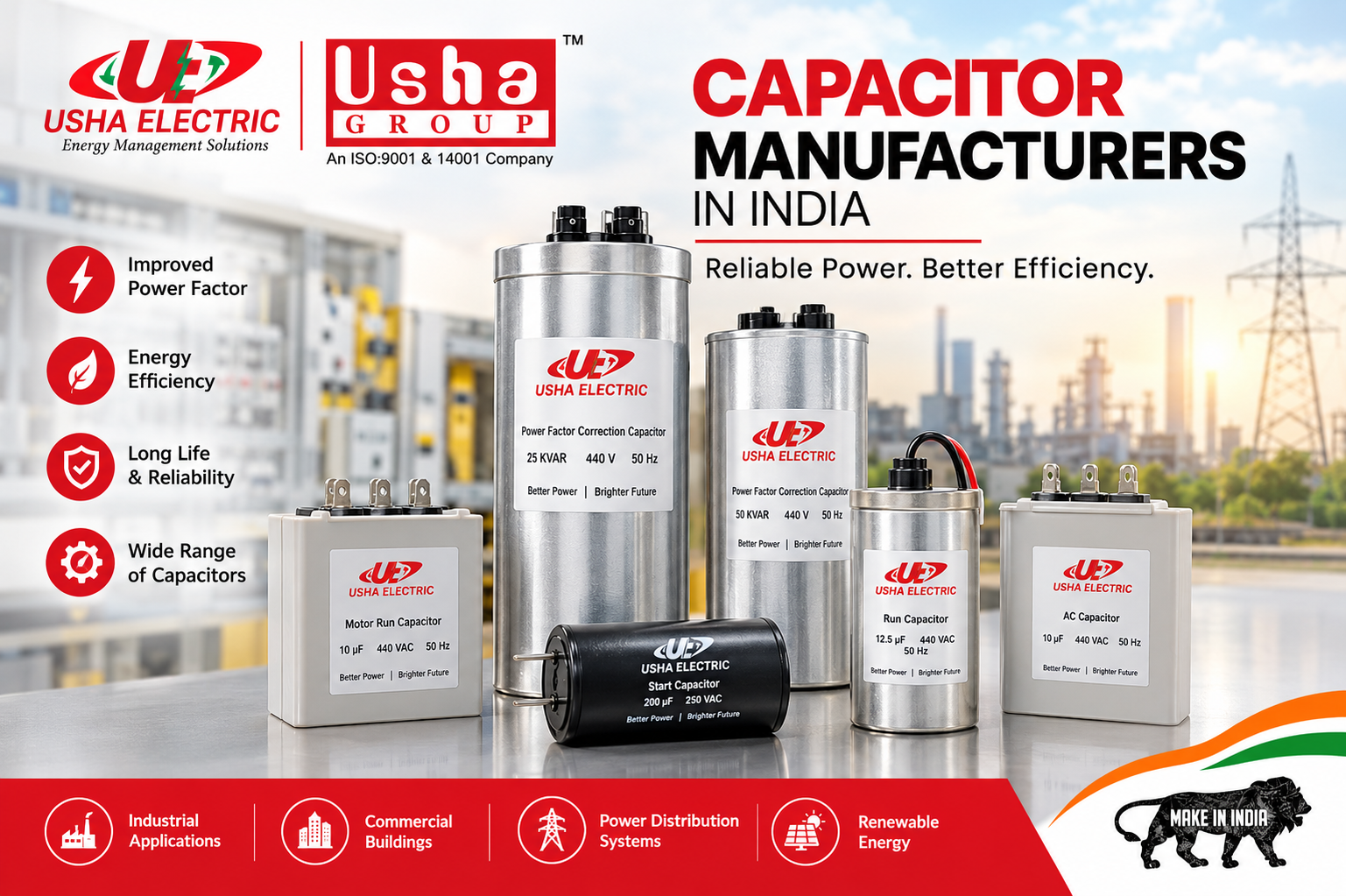
A capacitor is one of those components you may not notice until something goes wrong. It is relatively small, yet it can have a direct impact on how an electrical system, motor or electronic circuit works. Capacitors are used in power factor correction panels, motors, HVAC equipment, power supplies, converters and many other applications.
Capacitor Manufacturers in India produce different types of capacitors to suit these varied requirements. But choosing the right one involves more than checking the µF value on the specification sheet. Voltage, frequency, temperature, application, construction and the way the capacitor will be installed all deserve a closer look.
If you are comparing products for an industrial or commercial application, the following guide covers the basics that are worth checking before you make a purchase.
What Is a Capacitor?
A capacitor is a component that stores electrical energy and releases it when required. It has conductive elements separated by an insulating material, known as a dielectric.
The way a capacitor is built depends largely on what it needs to do. One may be intended for energy storage, another for filtering, while a different design may be used for motor operation or power factor correction.
In an industrial electrical setup, capacitors are commonly used to manage reactive power and improve power factor. In electronic circuits, they can smooth variations in voltage or help filter unwanted electrical signals.
What Are the Main Types of Capacitors?
The term “capacitor” covers quite a few different products. A capacitor used with a motor, for example, does not necessarily have the same characteristics as one used in a power electronics application.
| Capacitor Type | Typical Application |
| Power Capacitors | Power factor correction and electrical distribution |
| Motor Run Capacitors | Single-phase motors, pumps and compressors |
| Motor Start Capacitors | Providing additional starting torque |
| Film Capacitors | Power electronics, filtering and AC applications |
| Electrolytic Capacitors | DC filtering and energy storage |
| AC Capacitors | HVAC systems, motors and electrical equipment |
| DC Capacitors | DC-link and electronic power circuits |
Each type can differ in terms of dielectric material, construction, voltage rating and capacitance. So, rather than choosing a capacitor simply because its specifications look similar, match it to the equipment and working conditions.
Where Are Capacitors Used?
You will find capacitors in far more equipment than you might expect. Some common applications include:
- Power factor correction panels
- Electric motors and pumps
- Air-conditioning and HVAC equipment
- Industrial automation systems
- Power supplies and converters
- UPS systems
- Renewable energy equipment
- Lighting systems
- Electrical distribution networks
- Consumer and commercial electronics
Take a motor as an example. Depending on its design, a capacitor may be needed to help it start, keep it running efficiently or perform both functions. In an industrial power system, meanwhile, a power capacitor may be installed to improve the power factor.
What Are the Benefits of Using the Right Capacitor?
Selecting a capacitor that actually suits the application can make a difference to the overall operation of the equipment.
- Improved electrical efficiency: In power factor correction systems, capacitors can reduce reactive power demand and help an electrical installation use power more effectively.
- Smoother motor operation: Start and run capacitors perform different jobs in motor applications. Using the appropriate type helps the motor start and operate as intended.
- Better filtering: Capacitors can help smooth voltage variations and filter unwanted electrical signals in suitable circuits.
- Fast energy storage: Capacitors can charge and discharge relatively quickly. This makes them useful in applications where energy needs to be delivered for short periods.
- Reduced losses: In suitable electrical installations, power factor improvement can reduce current flowing through the system and help lower associated electrical losses.
How to Choose the Right Capacitor?
This is where a little attention upfront can prevent trouble later. Before ordering, go through the following specifications.
1. Capacitance
Capacitance is generally expressed in microfarads (µF). The required value should be based on the equipment or circuit specification. Don’t assume that a slightly different value will work just because the physical size looks right.
2. Voltage Rating
The capacitor must be suitable for the voltage at which it will operate. Check the system voltage and the manufacturer’s specified rating before making your selection.
3. Frequency
Frequency is another detail that should not be overlooked. Depending on the application, the capacitor may need to operate at 50 Hz, 60 Hz or another specified frequency.
4. Operating Temperature
Heat can affect both capacitor performance and service life. If the component will be installed inside industrial equipment or an enclosed panel, consider the actual temperature it is likely to experience.
5. Intended Application
A motor capacitor, power factor correction capacitor and electronic filtering capacitor are designed for different jobs. Start with the application and then select the product rather than doing it the other way around.
6. Construction and Service Life
For equipment that runs for long hours, construction quality becomes especially important. Check the materials, protection features, expected service life and overall design. These details can matter just as much as the basic electrical rating.
Buying Checklist for Capacitors
Before sending your purchase order, keep these details handy:
- Required capacitance
- Rated voltage
- Operating frequency
- Application type
- Temperature conditions
- Physical dimensions
- Terminal or mounting arrangement
- Expected service life
- Required quantity
- Testing and quality requirements
- Technical support requirements
It may seem like a basic checklist, but getting these details right at the beginning can save considerable time later. A mismatch in specifications can lead to installation problems, poor performance or premature replacement.
Why Choose Usha Capacitors?
When selecting a capacitor for an industrial or commercial application, it is important to consider product suitability, electrical specifications, quality checks, and the availability of technical information. Usha Capacitors can be considered for applications that require capacitors matched to specific operating conditions and equipment requirements.
Before selecting a product, check the available capacitor types, capacitance values, voltage ratings, operating conditions, and intended application. Choosing the correct specification can help support reliable equipment operation and reduce the risk of compatibility issues.
For the right selection, share your application details and technical requirements with the supplier so the appropriate capacitor can be identified.
Frequently Asked Questions
A capacitor stores electrical energy and releases it when required. Depending on its design, it may also be used for filtering, power factor correction, motor operation and voltage stabilisation.
Power capacitors are commonly used for power factor correction, usually as part of a capacitor bank. The required rating depends on the electrical load and the level of correction needed.
Begin with the equipment manufacturer’s specifications. Check capacitance, voltage, frequency, temperature, application, physical dimensions and expected service life before selecting the capacitor.
Yes. Capacitors are commonly used with single-phase motors. Depending on the motor design, it may require a start capacitor, a run capacitor or both.
A capacitor is part of a larger electrical system, so an unsuitable or poorly made component can affect equipment performance and reliability. Appropriate ratings, good construction and proper testing are important for dependable operation.
Yes. Capacitors are used in renewable energy and power electronics, including inverter, converter and filtering applications. The appropriate capacitor depends on the equipment design and electrical requirements.
Look at the capacitance, voltage rating, frequency, application, operating temperature, construction, dimensions and expected service life. For specialised requirements, discussing the application with the manufacturer’s technical team can also help avoid an incorrect selection.